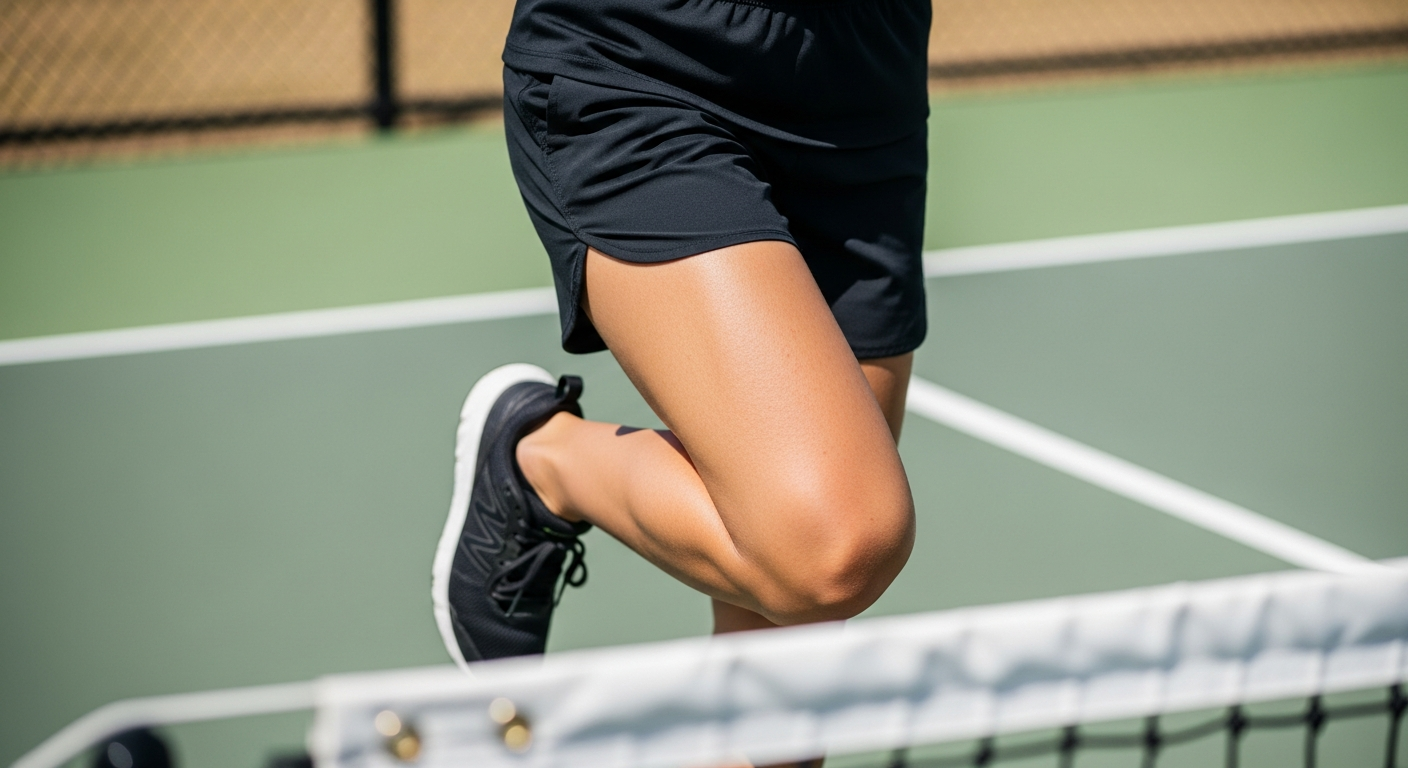
Before your next match, try this simple test. If you can't pass it, your hips are a ticking time bomb on the court — and here's exactly what to do about it.
Quick answer: What this test tells you
This test is a quick screen for hip stability and endurance—the exact qualities that protect your knees and low back during lateral movement, reaching, and hard stops.
The test: 30-second single-leg sit-to-stand (chair)
What you need: a stable chair/bench (about knee height) and a timer.
- Sit tall on the edge of the chair.
- Extend one leg straight out (do not let it touch the floor).
- Stand up and sit down under control for 30 seconds.
Pass / fail standards (simple and useful)
- Pass: controlled reps with level hips, knee tracking over mid-foot, no trunk collapse.
- Red flags: knee caves inward, pelvis drops/rotates, you "windmill" the arms, or you feel it mostly in the low back/quad instead of glutes.
Those compensations often show up when hip abductors/external rotators can't stabilize the femur under load—one common pathway to knee irritation during cutting and reaching sports.
Why this matters in pickleball
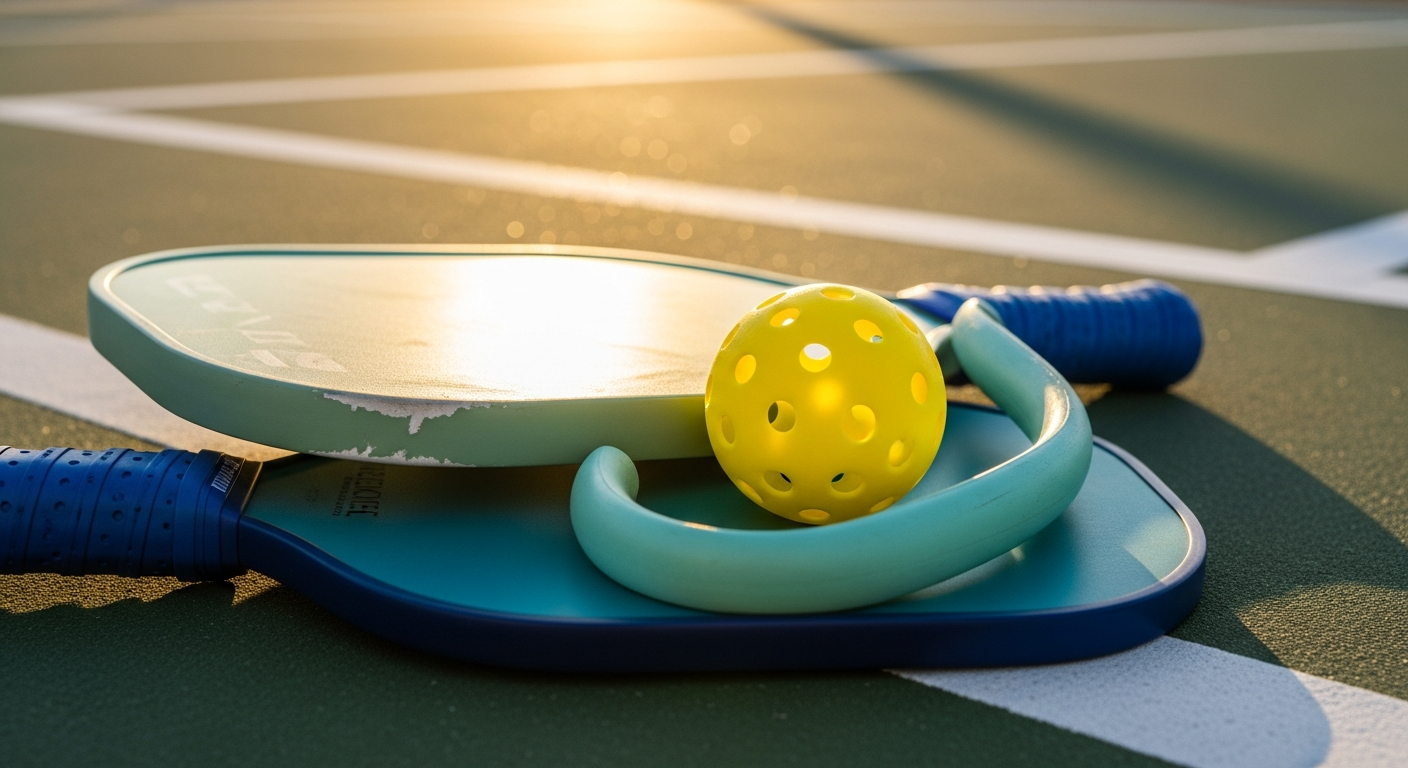
Pickleball demands repeated single-leg loading (reach + recover), plus rapid deceleration. When hip control fails, the knee and spine tend to absorb stress they weren't designed to handle.
Pickleball injury research has documented substantial injury burden and mechanisms that often include events like falls and lower-extremity issues, which makes hip capacity and control a high-value target in prevention.1,2
What to do if you fail
- Step-downs (slow 3 seconds down, light push up): 2–3 sets of 6–10/side
- Side plank (knees bent) or Copenhagen (short lever): 2–3 sets of 15–30 sec/side
- Split squat isometric holds: 2–3 sets of 20–40 sec/side
Progress by increasing control first, then load, then speed. Need guidance? Book a strategy session.
Bottom line
If this test exposes hip weakness or control loss, don't ignore it. Fixing hip capacity is one of the fastest ways to reduce recurring knee/back flare-ups and keep you moving well on court.
References
- Owoeye OBA, et al. Understanding Injury Patterns and Predictors in Pickleball Players. 2025. Sports Medicine - Open.
- McMillan P, et al. The Epidemiology of Pickleball Injuries Presenting to US Emergency Departments. 2025. (PMC)
Ready to train smarter?
Whether you're dealing with pain, chasing performance, or building strength for the long game — Joe designs programs specifically for your body and your goals.
Book a strategy sessionLearn about coaching from anywhere in the world with an experienced, certified strength and conditioning coach.