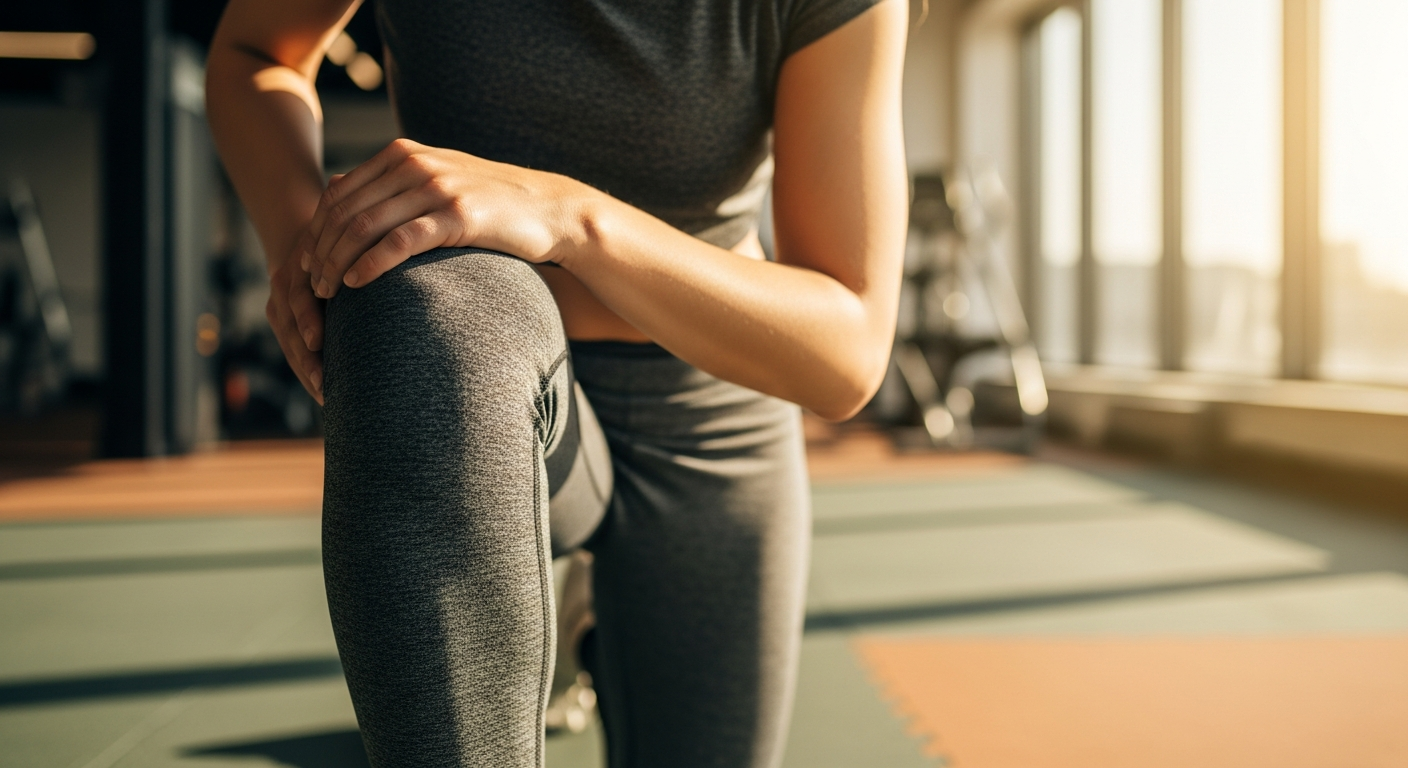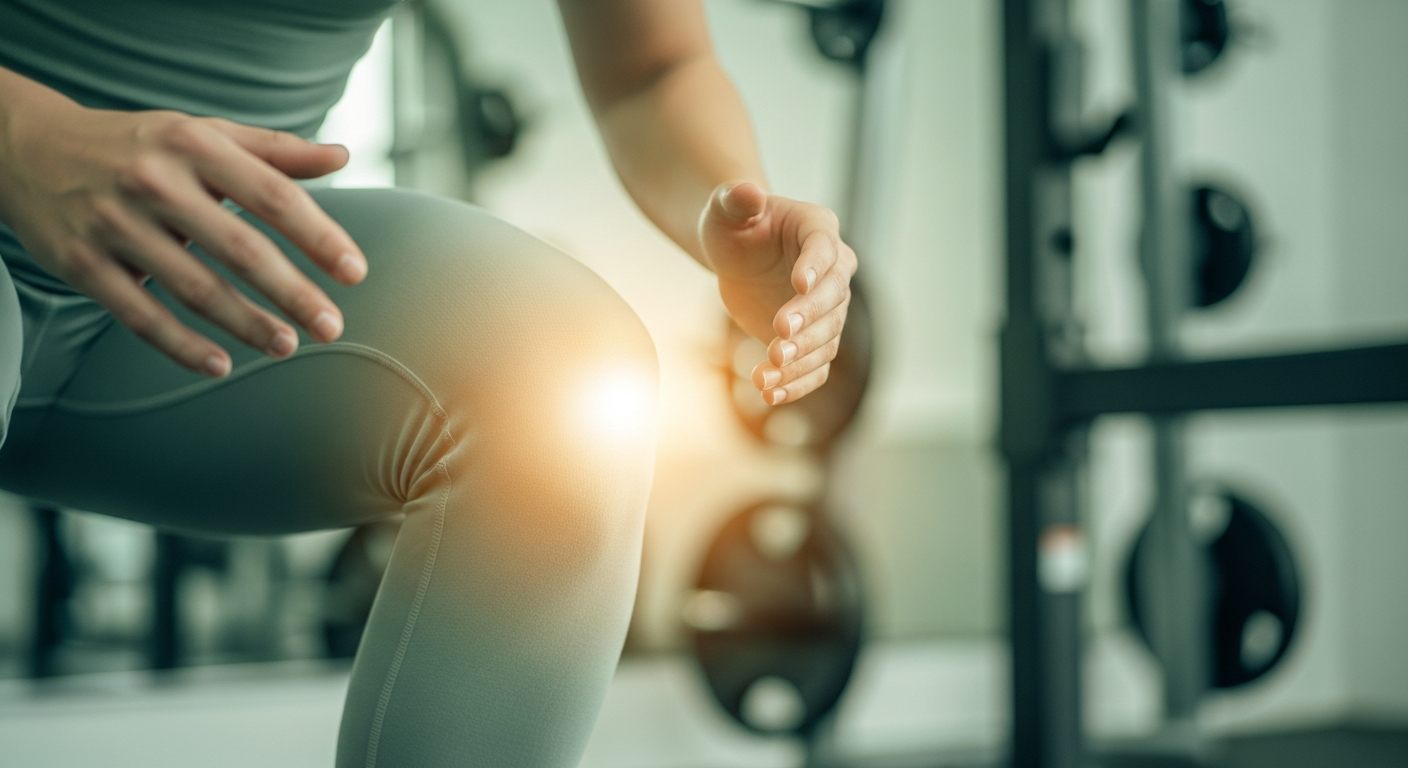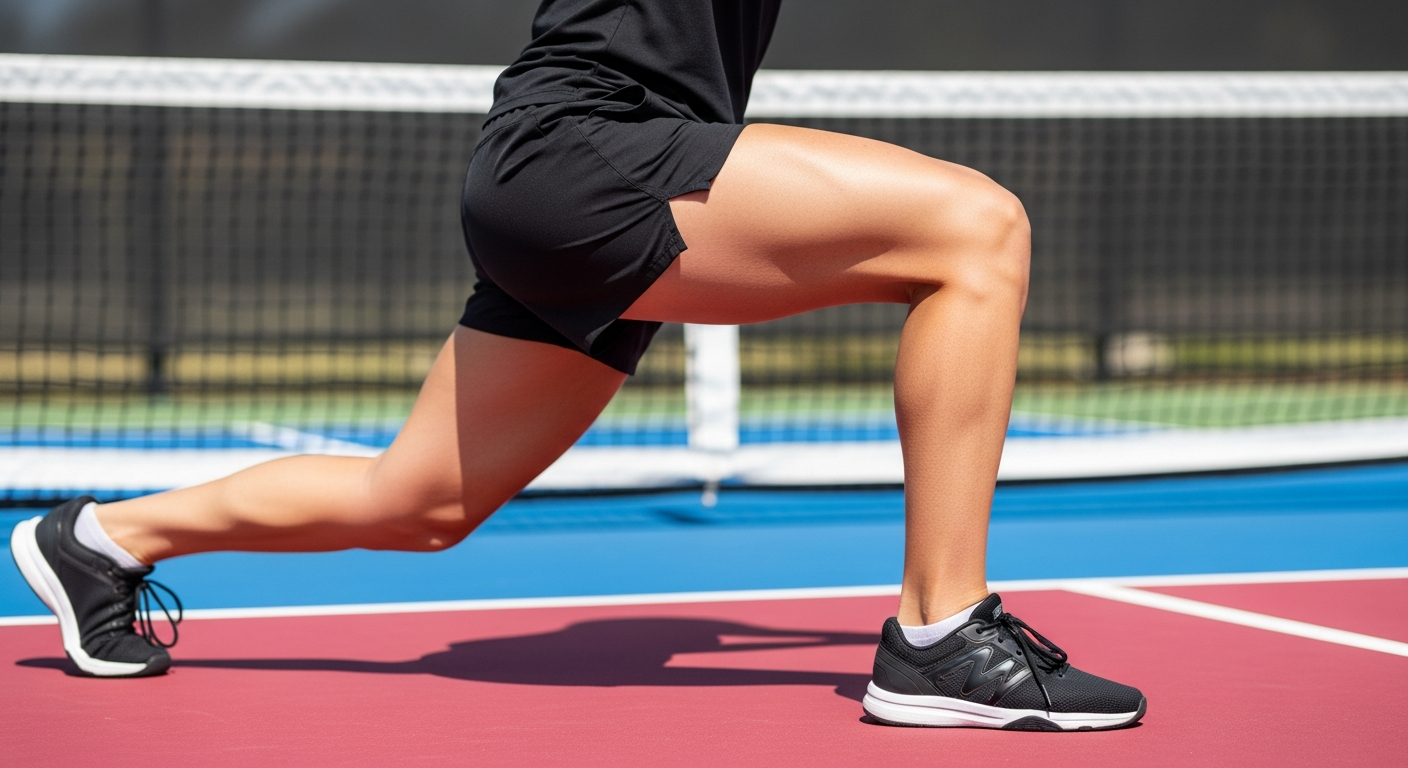
That knee tweak, that lower back tightness after a long match — it all traces back to the same place. Weak hips are the silent culprit behind most pickleball injuries.
If you play pickleball long enough, you'll eventually hear it (or feel it): a "little" knee tweak on a wide step, a sore low back after a long session, or a hip that just feels "off" the next day.
As a strength & conditioning coach, here's the pattern I see over and over: people blame the painful joint — the knee, the back, the shoulder — but the real issue is often upstream. And in pickleball, the most common upstream issue is hip strength and hip control.
Pickleball has exploded in popularity, and research is catching up. Recent studies show the knee is one of the most commonly injured areas in pickleball players, with the back also showing up frequently.1 That matters, because the hips play a major role in how forces travel through both the knee and the spine during quick changes of direction.
Quick answer: Why do weak hips cause pickleball injuries?
Weak hips increase injury risk because they reduce your ability to control the pelvis and femur during fast lateral movement, deceleration, and single-leg loading. When hip stabilizers can't do their job, the body often compensates with:
- Knee collapse inward (dynamic knee valgus) on lunges, wide steps, and quick stops
- Extra rotation and stress through the low back when reaching, pivoting, or reacting late
- Overuse of the quads, hip flexors, and low back instead of distributing load through the glutes
The pickleball demands that expose weak hips
Pickleball is deceptively demanding because it combines quick reactions with short bursts of:
- Lateral shuffles and wide steps
- Hard deceleration (stop-and-go movement)
- Single-leg balance during reaching and recovery steps
- Rotation and anti-rotation during strokes
In the research, joint/ligament sprains and muscle strains are consistently reported among common injury categories in pickleball.2 In real-life coaching terms: if your hips can't absorb and control force, something else will — and that "something else" is often the knee or the low back.
Weak hips → knee pain: The knee is often the "victim"
A very common pickleball scenario:
- You get pulled wide
- You plant hard to change direction
- Your knee caves in slightly
- Now you feel that familiar ache (or a sharp pinch) on the inside/front of the knee
That inward collapse is frequently tied to insufficient hip strength and control — especially the hip abductors and external rotators — which help keep the femur aligned over the knee during single-leg tasks.
Sports medicine literature has connected abnormal hip mechanics to knee injury mechanisms, and research continues to examine the relationship between hip strength and dynamic knee valgus (that "knee cave").3 Systematic review evidence also evaluates how hip strength relates to dynamic knee valgus in healthy adults, reinforcing why coaches pay so much attention to hip control in cutting/lateral sports.4
Even better: targeted hip abductor strength training has been shown to improve indicators like pelvic control and dynamic knee alignment in athletes, which is exactly what pickleball players need when they're moving laterally at speed.5
Weak hips → low back tightness: The back picks up the slack
If your hips don't produce and control force effectively, your spine often compensates. That's why so many active adults tell me:
"My back gets tight after matches, especially after a lot of reaching and quick stops."
The glute medius (one of the key hip stabilizers) is frequently discussed in the low back pain research, with evidence showing functional differences in people with and without low back pain and how hip muscle dysfunction can influence spinal loading and stability demands.6
And the practical coaching takeaway is simple:
- If your hips are weak, your pelvis becomes less stable
- If your pelvis is less stable, your low back has to "brace" more often
- More bracing + more rotation + fatigue = recurring tightness and flare-ups
There's also evidence evaluating hip strengthening interventions for reducing pain and disability in people with low back pain, supporting what many coaches see clinically: improving hip capacity can be a key part of reducing low-back symptoms in active adults.7
The overlooked pickleball link: Hip strength, change of direction, and falls
One of the most important (and overlooked) injury mechanisms in pickleball is falls, especially as the sport attracts more adult and older recreational players.
Sport-specific research on recreational pickleball players has examined factors like hip abductor strength, single-leg squat form, and change-of-direction ability when comparing players who fell during play vs those who did not.8 That's a big deal because "fall prevention" isn't just about balance drills — it's also about having enough hip strength to keep playing long-term and control the body when you're late to a ball and forced into an awkward recovery step.
How to tell if your hips are the problem
If you're dealing with recurring knee or back issues, weak hips are more likely if you notice any of the following:
- Knees drift inward when you squat, lunge, or step down
- You feel most work in your quads and low back, not your glutes
- Single-leg balance feels shaky (especially after fatigue)
- Side-to-side movement feels "heavy" or unstable
- Your low back tightens up after long match days
What a strength coach looks for (movement evaluation)
This is exactly why I'm big on a movement evaluation before adding more training volume.
For pickleball players, I want to see:
- Single-leg control (step-downs, single-leg squat pattern)
- Hip stability during lateral movement
- Pelvic control (does the pelvis drop/shift under load?)
- Ankle mobility (because limited dorsiflexion can shift stress to the knee/hip)
- Rotation control (can you rotate through hips/thoracic spine without dumping into the low back?)
The goal isn't to label you "broken." The goal is to identify the one or two limiting factors that keep showing up under speed and fatigue — and then train those factors directly.
The solution: Train the hips like a pickleball athlete
The fix is not "random glute exercises." It's building hip strength + hip control that carries over to:
- Deceleration (stopping safely)
- Lateral movement (shuffling and wide steps)
- Single-leg stability (reaching and recovery)
- Rotation and anti-rotation (strokes and bracing under fatigue)
When hips get stronger and more stable, the knee and back usually calm down — because they're no longer forced to compensate.
Bottom line
If you want to play pickleball for years without the recurring knee tweaks and low-back flare-ups, don't just "exercise more." Train the right qualities — avoid these common strength mistakes — starting with the hips.
Next step: If you're dealing with recurring knee, back, or hip issues, a movement evaluation can pinpoint exactly what your body is doing under load and why certain injuries keep repeating.
References
- Owoeye OBA, et al. Understanding injury patterns and predictors in pickleball (knee and back among commonly reported injury sites). 2025. (PubMed/PMC sources)
- Azar FM, et al. Pickleball: A standard review of injury prevalence and injury patterns (common strains/sprains and other injuries). 2024. (PubMed)
- Powers CM. The influence of abnormal hip mechanics on knee injury. J Orthop Sports Phys Ther. 2010.
- Alzahrani AM, et al. Is hip muscle strength associated with dynamic knee valgus? A systematic review. 2021. (PMC)
- Lashien SA, et al. Effect of functional hip abductor strength training on pelvic drop and dynamic knee valgus. 2024. (PMC)
- Sadler S, et al. Gluteus medius muscle function in people with and without low back pain (implications for spinal loading/stability). 2019. (PMC)
- Santamaría G, et al. Effect of hip muscle strengthening exercises on pain and disability in people with low back pain (review). 2023.
- Myers B, et al. Hip strength, change of direction, and falls in recreational pickleball players. 2024. (IJSPT)
Ready to train smarter?
Whether you're dealing with pain, chasing performance, or building strength for the long game — Joe designs programs specifically for your body and your goals.
Book a strategy sessionLearn about coaching from anywhere in the world with an experienced, certified strength and conditioning coach.